The bottom line: strategic timing between November and March is non-negotiable for enjoying the outdoors, paired with strict adherence to local dress codes. This combination guarantees a seamless, high-value experience in one of the world’s safest cities. A realistic daily budget of $200 unlocks the best of this modern metropolis without falling into tourist traps.
Dreading the thought of overpaying for tourist traps or melting in the heat without a plan? My pragmatic dubai travel guide cuts through the noise to deliver a strategic roadmap for your trip. Discover the exact logistics hacks and cost-saving tips I use to optimize every dirham and minute of your stay.
Your pre-flight checklist: getting the basics right
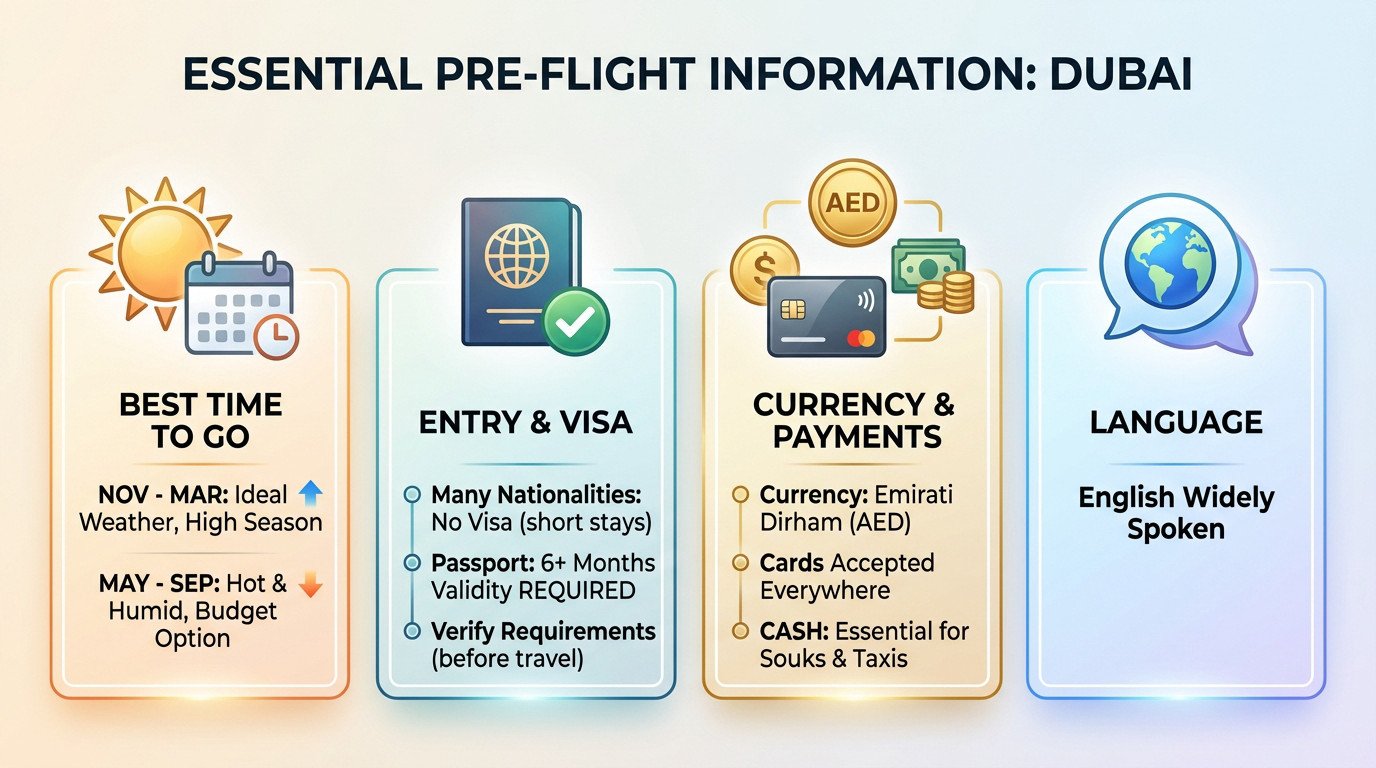
You wouldn’t believe how many smart people get stuck because they ignored the boring details. This isn’t just paperwork; it’s the foundation of a dubai travel guide that actually works. Let’s focus on the logistics that will save your trip.
When to Go: Timing Your Trip for Perfect Weather
For perfect beach weather, aim for November to March. It’s the sweet spot for outdoors. Just know that everyone else knows this too, so expect higher prices and crowds.
Summer (May to September) is the « oven. » We’re talking extremely hot and humid conditions where you live in AC. The upside? Luxury hotels drop rates significantly.
It comes down to wallet versus comfort. For a first visit, prioritize winter.
Entry Rules and Visa: What You Actually Need
Many (EU, US citizens) skip the visa hassle. However, airlines deny boarding if your passport isn’t valid for at least six months beyond arrival. Check that date now.
Immigration might ask for a return ticket. Verify the specific requirements for your nationality today because diplomatic rules shift faster than sand dunes.
Planning a longer stay? Secure a visa.
Money Matters: Dirhams, Cards, and Cash
You’ll spend the Emirati Dirham (AED). Since it’s pegged to the US dollar, the rate is rock solid. No need to stress about fluctuations.
Plastic is king in malls and hotels. But don’t get caught empty-handed in traditional souks or taxis. Cash is still the law there. It’s non-negotiable.
My strategy? Withdraw dirhams at the airport for immediate needs, then use city ATMs.
| Element | My Recommendation |
|---|---|
| Best Time to Visit | November – March (Pleasant weather) |
| Currency | Emirati Dirham (AED). Bring some cash. |
| Visa | Check requirements for your nationality; 6-month passport validity is key. |
| Language | Arabic (Official), but English is spoken everywhere. |
The Unwritten Rules: Navigating Dubai’s Local Culture
Dress Code Decoded: What to Actually Pack
Dubai is cosmopolitan, yet it remains a Muslim city. Inside hotels and private beaches, western outfits are standard. However, once you step into public spaces, modesty becomes the rule. Trust me, you don’t want to be that tourist.
For women, the rule is simple: cover shoulders and knees in malls and public spots. A lightweight shawl in your bag works wonders here. It saves you from awkward stares.
Men aren’t off the hook; avoid tank tops in the city. When visiting mosques, strict conservative attire is mandatory for everyone. Respect is the currency here.
- In Malls & Public Areas: Shoulders and knees covered.
- At Resorts & Beaches: Standard swimwear is fine.
- In Mosques: Long sleeves, long trousers/skirts, and head covering for women (often provided).
Public Conduct: Affection, Alcohol, and the Holy Month
Public displays of affection, like kissing, are a no-go. Holding hands is generally tolerated, but keep it low-key. You don’t want to attract the wrong kind of attention.
Alcohol is limited to licensed venues like hotels, bars, or clubs. Drinking in public or being drunk on the street is strictly forbidden. The fines are massive, and jail time is a real possibility. Don’t risk it.
During Ramadan, be extra respectful. Do not eat, drink, or smoke in public during fasting hours.
Safety and Security: A City Built on Trust
Here is Dubai’s biggest flex: it is one of the safest cities in the world. Petty crime is almost non-existent here. You can walk around at night without looking over your shoulder.
Just use your common sense like anywhere else, and your trip will go perfectly. It really is that simple.
Your Basecamp and Transport: Where to Stay and How to Move
Alright, you know the basics. Now, let’s pick a strategic HQ and master the transport system so you don’t waste a single minute.
Choosing Your Neighborhood: Location Is Key
To stay right in the heat of the action near the icons, aim for Downtown Dubai. You have the Burj Khalifa and Dubai Mall right there. It is the perfect spot for a short, high-intensity trip.
If you prefer sand and a more laid-back vibe, Dubai Marina or JBR are the top choices. These spots are unbeatable for families and anyone who loves lounging.
For tighter budgets and a dose of real authenticity, look toward Deira or Bur Dubai.
Getting Around Dubai: Metro, Taxis, and My Advice
The Dubai Metro is my go-to option. It is spotless, air-conditioned, and hits most major tourist spots for a fraction of a taxi fare. Grab a Nol card immediately upon arrival; it is the most economical way to get around.
Taxis and ride-hailing apps like Uber or Careem are everywhere and surprisingly affordable. They are perfect for routes the metro doesn’t cover or when you are moving late at night.
Renting a car? I advise against it for a first trip. The traffic can be intense.
Connectivity Hack: Staying Online Without the Roaming Fees
Forget about exorbitant roaming charges. As soon as you land at DXB airport, pick up a free tourist SIM card or buy a solid data plan.
Free Wi-Fi is available in most public places, but a local SIM will save your life.
Beyond the Postcards: Activities Actually Worth Your Time
You are sorted on logistics and mobile. Now let’s talk about filling your days with actual memories, not just tourist traps.
The Modern Marvels: What to See, What to Skip
The Burj Khalifa is an absolute non-negotiable. The view from the top is frankly spectacular, but to properly prepare for your Burj Khalifa visit, book tickets weeks in advance to avoid the insane queues and walk-up price gouging.
The Dubai Mall right next door is way more than a shopping center. Go for the massive aquarium, the Olympic-sized ice rink, and the evening fountain show. It is chaotic but impressive.
For a total shift in perspective, a visit to the Museum of the Future is a solid option. It shows a completely different, forward-thinking side of the city.
Old Dubai and the Creek: A Dose of Authenticity
To escape the relentless skyscrapers, head straight to the Al Fahidi historical district. Get lost in those narrow alleyways to uncover the Dubai that existed before the oil boom. It is a genuine contrast. You finally feel the city’s soul here.
Cross the Dubai Creek on an abra, a traditional wooden water taxi. It costs just one dirham and is honestly one of the best experiences in town. Explore the gold and spice souks on the other side. It is loud, vibrant, and perfect.
Desert Adventures: How to Choose the Right Safari
A desert safari is a classic, but let’s be real, they aren’t all equal. Be very suspicious of deals that seem too cheap; they often herd you into overcrowded camps.
Stick to operators offering smaller camps or experiences within protected nature reserves. Quality costs a bit more here, but trust me, it is worth every penny to avoid the crowds.
The combination of dune bashing, a camel ride, and dinner under the stars remains a winning formula.
- Top 3 Experiences: The view from Burj Khalifa, an Abra ride on the Creek, a quality desert safari.
- Cultural Stop: Al Fahidi historical district.
- Evening Entertainment: The Dubai Fountain show.
Eat and Spend Smart: A Practical Guide to Dubai’s Budget
Exploring is great, but you need to refuel. Here is how to eat well in Dubai and manage your budget without compromising the experience.
From Street Food to Fine Dining: A World on a Plate
Dubai’s culinary scene is a direct reflection of its population: incredibly diverse. You will find everything here, from high-end starred restaurants to tiny, unassuming street joints. It is a mix you won’t see elsewhere.
For a meal that is authentic and cheap, head straight to Deira or Satwa. You have to taste the shawarma, fresh Lebanese mezzes, or a spicy Indian curry.
You must taste the chebab, the Emirati pancake, and the Arabic coffee with cardamom at least once.
Your Daily Budget: A Realistic Breakdown
It is tough to give a single number, but we can establish ranges. A thrifty traveler can get by with about $100 per day if they play it smart.
For a comfortable stay with some nice activities and restaurants, plan between $200 and $250 per day per person. This fits a standard dubai travel guide budget.
The biggest expense item, right after accommodation, will definitely be the activities and outings.
My Top Money-Saving Hacks to Stretch Your Dirhams
Eating in mall « food courts » is a brilliant alternative to overpriced restaurants. The choice is massive and the quality is surprisingly high. It is a real good plan that saves you cash without sacrificing taste.
Use the metro as much as possible to save cash. Alcohol is very expensive, so limiting consumption will have a direct impact on your budget. Finally, enjoy the many free public beaches available to everyone.
- Eat Cheap: Explore restaurants in Deira and Bur Dubai.
- Travel Smart: Use the Dubai Metro for long distances.
- Free Fun: Enjoy public beaches.
- Avoid This: Alcohol is a budget-killer; a single beer can be expensive.
You are now armed with the ultimate strategy to conquer Dubai without breaking the bank. Trust the plan, respect the local culture, and keep your eyes open. Whether you are haggling in Deira or dining in Downtown, you have the keys for a seamless trip. Now, stop planning and go enjoy the ride
FAQ
What are the absolute golden rules for tourists in Dubai?
Don’t overcomplicate it, but do respect the local culture. The main rules are: dress modestly in public areas (shoulders and knees covered), absolutely no public displays of affection beyond holding hands, and never drink alcohol outside of licensed hotels or bars. Also, be careful with photography—never take pictures of people without permission or government buildings. It’s strictly enforced.
How many days do I actually need to see Dubai?
To do it right without burning out, aim for 5 to 7 days. This gives you enough time to hit the icons like the Burj Khalifa and the Dubai Mall, spend a proper afternoon in the desert, and actually relax at a beach club. Any less and you’re just running a marathon; any more and your wallet will start to feel the heat unless you really watch your budget.
Is Dubai actually friendly to American tourists?
100%. Dubai is incredibly safe and welcomes millions of US tourists. Plus, the logistics are easy: as an American, you don’t need to arrange a visa beforehand; you get a visa on arrival valid for 30 days (just ensure your passport has 6 months of validity left). English is spoken everywhere, so you won’t feel lost.
What’s the real cost of a trip to Dubai?
It depends on your style, but let’s talk real numbers. A mid-range traveler usually spends around $200–$290 (approx. 730-1060 AED) per day per person. This covers a decent hotel, good food, and transport. If you want the full luxury experience, double that. You can scrape by on less, but you’ll miss out on the top-tier activities that make the trip worth it.
Can women really wear shorts in Dubai?
Yes, but context is key. At your hotel pool, resort, or a private beach club, wear whatever swimwear or shorts you want. However, in malls, traditional souks, and public streets, the « unwritten rule » is to cover your shoulders and knees. My hack? Keep a light shawl or scarf in your bag—it lets you go from the beach to the mall without any hassle.
What are the big « don’ts » I should avoid in Dubai?
Aside from the dress code, don’t use aggressive gestures or bad language, especially in traffic—it can actually get you in legal trouble here. Don’t try to bring alcohol into the country without checking the duty-free limits, and never be intoxicated in public. Also, if you visit during Ramadan, do not eat, drink, or smoke in public during daylight hours out of respect.
When is the absolute best month to visit?
November through March is the sweet spot. You get perfect 75°F–80°F (24°C–27°C) weather, which is ideal for the desert safaris and beaches. If you try to save money by going between May and September, you’re looking at 100°F+ (40°C+) heat and 95% humidity. Trust me, you’ll be stuck indoors. Stick to the winter months for the real experience.
Can couples show affection publicly in Dubai?
Keep it for the hotel room. Holding hands is generally tolerated for married couples, but kissing or hugging in public is a strict no-go. It’s considered offensive to public decency. Don’t risk a fine or an uncomfortable interaction with the police just for a moment of romance.
Is a budget of $100 a day realistic?
It’s tight, but possible if you’re smart about it. That $100 (approx. 367 AED) has to cover your hotel, food, and transport. You’ll need to stay in older districts like Deira or Bur Dubai, eat at local cafeterias (which are delicious and cheap, by the way), and stick to the Metro using a Silver Nol Card. You won’t be dining at the Burj Al Arab, but you can still explore the city.