The essential takeaway: While buses suit budget explorers, private guides deliver surgical efficiency for tight schedules. Prioritizing a tour that includes the Al Fahidi district and an authentic Abra ride ensures a genuine cultural immersion beyond mere photo stops. For optimal comfort, targeting the November to March window guarantees perfect 24-29°C weather.
Are you tired of wasting time in tourist traps that promise the world but only deliver drive-by photo stops? This guide cuts through the noise to help you select the most efficient dubai city tour by strictly comparing the ROI of private guides versus hop-on-hop-off buses. You will discover the specific logistical hacks and itinerary adjustments required to guarantee a flawless, high-value trip.
Choosing Your Tour Style: Bus or Private Guide
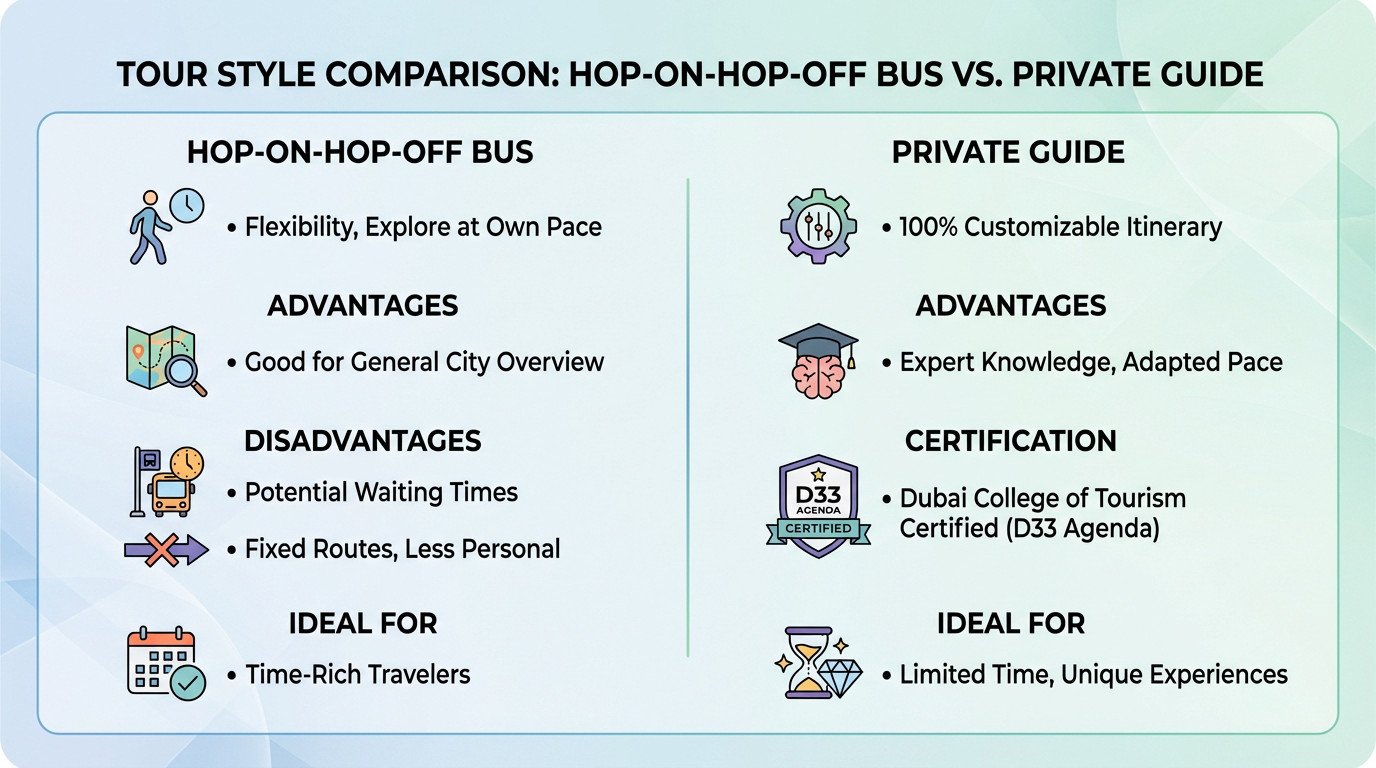
The Hop-On-Hop-Off Bus: Freedom at a Price
Let’s look at the Big Bus strategy for your dubai city tour. It works because you grab a seat on the Red Route and just cruise past the Burj Khalifa. You jump off whenever you spot something cool, giving you total control over your stops.
Here is the catch regarding this method. You are tied to their schedule, meaning you might wait 40 minutes in the heat for the next ride. It is a fixed « Red Route » loop, so it feels less personal.
My verdict is simple: choose this if you want a low-stress overview without handling logistics. However, if you hate waiting or want a tailored experience, this isn’t for you.
The Private Guide: Your Key to the Real Dubai
This is the surgical approach to travel. You get an itinerary that is 100% customizable, so you dictate the pace and the stops. You won’t waste a single minute on tourist traps that don’t interest you.
A real guide changes the entire game. These pros aren’t random; they pass rigorous Dubai College of Tourism training aligned with the city’s D33 agenda. You get insider context and local secrets, not just a script read from a pamphlet.
This fits the traveler who values their time over saving a few bucks. It is the only way to access unique Dubai special tours that the big buses simply can’t reach.
Trust me, this official certification is a quality guarantee.
The Verdict: Hop-On-Hop-Off vs. Private Tour
Which Tour Style Fits You Best?
Stop overthinking your dubai city tour choice. This breakdown saves you money and stress.
| Feature | Hop-On/Hop-Off Bus | Private/Guided Tour |
|---|---|---|
| Flexibility | High (within the set routes) | Total (fully customizable itinerary) |
| Pace | Your own, but depends on bus schedule | Completely adapted to you |
| Experience | General overview, audio guide commentary | In-depth insights, Q&A with an expert, access to hidden spots |
| Logistics | You manage your time at each stop | Zero-stress, door-to-door service, all logistics handled |
| Best for… | First-timers, independent explorers on a budget, long stays | Travelers with limited time, families, those wanting a VIP experience |
Here is the raw truth I wish someone told me before I booked. If you are solo or watching your budget closely, the bus looks attractive. But you need to calculate the « hidden costs » of your comfort. Reviews consistently flag the heat issue—waiting 30 minutes for a delayed bus in 40°C weather isn’t sightseeing; it is endurance training. You also risk logistical headaches, like lost paper tickets forcing you to pay for expensive taxis back to your hotel.
On the flip side, the private tour is the ultimate efficiency hack. You pay a premium, but you stop losing time. You skip the lines, you get a cold car instantly, and you actually learn from a local instead of a generic recording. If you have a family or just 48 hours, avoiding the « cattle class » experience isn’t a luxury. It is a strategic move to ensure you actually see the city rather than just the inside of a bus stop.
Decoding the Itinerary: Photo Stops vs. Real Experiences
Now that you have chosen your side, let’s talk about what you will REALLY see, because all « stops » are not created equal.
Modern Marvels: What to Expect at the Icons
Most dubai city tour itineraries list the giants, but don’t expect VIP access. You are generally looking at the Burj Khalifa from the ground or walking past the Dubai Mall entrance.
Want those skyline views from the 124th floor? That ticket is rarely in the package; you stay at street level.
For Palm Jumeirah and Atlantis, expect a strategic pause at a waterfront viewpoint. However, some smart operators include the Monorail ride; it’s the only way to actually grasp the island’s shape without a helicopter.
The « Drive-By » Sights: Managing Your Expectations
The iconic Burj Al Arab is the classic « photo stop » victim. Your bus pulls over at Jumeirah Beach for that obligatory sail-shaped backdrop, but you definitely aren’t walking into the lobby.
Similarly, landmarks like the Dubai Frame are often just drive-bys. The schedule prioritizes volume over depth, giving you a quick visual confirmation rather than a chance to explore the interior.
Here is the mistake that ruins trips: assuming you will visit everything. If a specific site matters to you, verify the stop duration. If it’s short, book a dedicated visit later or you will feel cheated.
- What a « photo stop » usually means:
- A 5-10 minute pause at a viewpoint.
- No entry tickets included.
- A quick explanation from the guide.
- Just enough time for a selfie.
Beyond the Glass Towers: Finding Dubai’s Soul
The Historical Al Fahidi District and the Souks
Most tourists get stuck downtown, but the real magic hides in Al Fahidi. Walking these narrow sikkas and seeing the traditional wind towers feels like a different planet compared to the skyscrapers. It’s the raw, unpolished history you actually came for.
Next, hit the markets. The Gold Souk dazzles, but the Spice Souk is where you wake up. It’s not just shopping; it’s a chaotic, fragrant punch to the senses.
Pro tips for the souks:
- Don’t be afraid to haggle; it’s part of the culture.
- Smell the frankincense and try the saffron-infused tea.
- Look for high-quality dates and local spices as souvenirs.
Crossing the Creek: The Essential Abra Experience
Forget the yachts. A 1 AED ride across the Dubai Creek in a wooden abra is unbeatable. You sit shoulder-to-shoulder with locals, watching the chaotic trade between Deira and Bur Dubai. It’s the most honest view of the city.
This boat ride connects Al Fahidi to the souks, acting as a bridge between eras. It isn’t just transit; it is a genuine cultural experience that grounds your entire trip.
Here is the truth: this is the most memorable thing you will do for under a dollar. Make sure your dubai city tour includes it.
Marc’s Logistical Hacks for a Flawless Tour
Timing, Pick-up, and the November-March Sweet Spot
Most operators for a dubai city tour grab you directly from your hotel, but always double-check the covered zones. If you book a shared transfer, expect some waiting while they collect other groups. Just stay in your room until reception calls. It saves you unnecessary lobby time.
Timing is everything here. The ideal season is from November to March, when temps hover around 24-29°C, making outdoor stops actually enjoyable. Don’t even try walking around in July. In summer, a tour in an air-conditioned vehicle is the only viable option.
Local Etiquette: The Simple Rules to Know
You need to respect the local vibe to get good service. It isn’t complicated, but it changes everything in how locals perceive you. Ignorance isn’t an excuse here.
Here is the cheat sheet to avoid fines or awkward stares:
- Dress code: Cover shoulders and knees, especially when visiting religious sites mentioned in tours.
- Photography: Always ask for permission before taking photos of people. It’s a sign of respect.
- Public affection: Keep it minimal.
Following these simple rules ensures a smooth and respectful experience. You don’t want to end your trip explaining yourself to security. For a complete overview, check our Dubai travel guide.
Ultimately, the « best » tour isn’t the most expensive one—it’s the one that fits your strategy. If you want efficiency and hidden gems, go private. For a relaxed overview, the bus works fine. Just remember: aim for the November-March window, respect local customs, and don’t skip the Creek. Now, go conquer the city.
FAQ
Is a Dubai City Tour actually worth your time and money?
If you have limited time or it’s your first visit, absolutely. It is the most strategic way to check off the « Big Three » (Burj Khalifa, Burj Al Arab photo stop, and the Souks) without the stress of navigating Dubai’s traffic yourself. It maximizes your « experience ROI » by condensing two days of logistics into a 5-hour window.
However, if you are the type of traveler who hates strict schedules or wants to spend three hours inside a museum, a standard group bus tour might frustrate you. In that case, I’d recommend investing in a private guide or simply taking taxis to the specific spots you care about.
What exactly do you get in a standard Dubai City Tour?
Don’t get fooled by the glossy brochures—you need to know the difference between a « visit » and a « photo stop. » Most standard tours include a drive-by of the modern icons (Burj Al Arab, Atlantis, Dubai Frame) where you get about 10 minutes to snap a selfie from the outside. Entry tickets to the Burj Khalifa are rarely included in the base price.
The real value usually lies in the Old Dubai leg. This typically includes a guided walk through the Al Fahidi historical district, the essential Abra creek crossing (a wooden boat ride), and a navigated tour through the Gold and Spice Souks. This is where having a guide is crucial to avoid getting lost in the maze of alleyways.
How much time should I block out for a City Tour?
A standard « half-day » tour runs about 4 to 5 hours. I highly recommend booking the morning slot (usually starting around 9:00 AM) so you finish by 1:00 PM. This leaves your afternoon completely free for a desert safari or relaxing by the pool.
There are « full-day » options that last 7 to 8 hours, but honestly, they often just add a long lunch break or a mall visit that you could easily do on your own. Stick to the 4-hour tour for the best efficiency.
What are the essential rules I need to follow as a tourist?
It’s simpler than people think, but respecting local culture is non-negotiable. First, the dress code: keep shoulders and knees covered, especially when visiting the Old City or mosques. It’s a sign of respect that changes how locals interact with you.
Second, photography etiquette: never take photos of people (especially women) without asking for clear permission first. Finally, keep public displays of affection to a minimum. Follow these three simple rules, and you will have zero issues.
What should I buy in the Souks during the tour?
Focus on the « Holy Trinity » of the souks: Gold, Spices, and Dates. The gold is government-regulated for purity, making it a safe investment. For spices, look for high-grade Saffron, but make sure you smell it first. For dates, look for local premium varieties like Medjool or Ajwa.
And here is a pro-tip: never accept the first price offered in the souks. Haggling isn’t rude here; it’s part of the transaction. Aim to negotiate the initial price down by at least 30% to 40% to get a fair deal.
How many days do I need to really see Dubai?
To see the city without burning out, 5 to 7 days is the sweet spot. This gives you enough buffer to do a City Tour, a Desert Safari, a day trip to Abu Dhabi, and still have time to enjoy your hotel’s beach.
If you are on a stopover and only have 2 days, the City Tour becomes mandatory. It is the only way you will see both the modern and historical sides of the emirate before your next flight.